What we call "flavor" is not what the tongue alone reports. Taste receptors on the tongue detect only the basic sensations—sweet, salty, sour, bitter, and umami—while the brain assembles the full experience from additional inputs: aroma, temperature, and the physical texture of food. Understanding each of these channels separately is what lets a cook move beyond following recipes and start engineering flavor deliberately. The practical payoff is concrete: serving a dish warmer can make it taste sweeter without adding sugar, and building textural contrast can add complexity without a single new ingredient.
The Multisensory Nature of Flavor: Beyond Basic Taste
The tongue is a surprisingly limited instrument. Its taste receptor cells respond to those five basic taste compounds, and that is where its direct job ends. Everything else that makes a dish distinctive—its depth, its character, its "fullness"—arrives through other senses and is integrated by the brain into a single perception we experience as flavor.
Writing on temperature and taste, the team at Tofu World frames this plainly: while the tongue detects salty, sour, sweet, bitter, and umami, "most of what we perceive as flavour comes from aroma." This is why a dish can be technically well-seasoned on paper yet taste flat in the mouth. If the aromatic and physical conditions are wrong, the basic tastes have little to carry. The corollary is encouraging for cooks: several of the most powerful flavor levers cost nothing and require no extra seasoning—only changed conditions.
Aroma: The Primary Driver of Flavor Perception
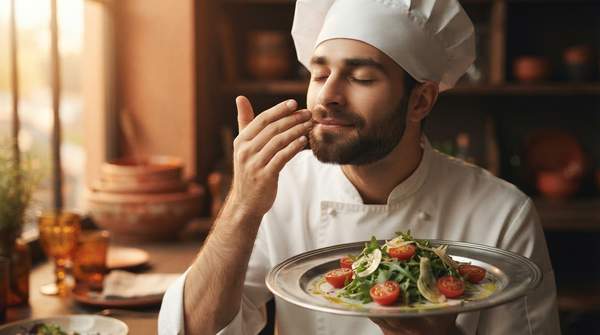
Aroma works through volatile compounds—molecules light enough to evaporate out of food and travel through the air to the olfactory receptors in the nose. A food with few volatiles reaching those receptors will register as bland no matter how it tastes on the tongue. This is the mechanism behind the familiar experience of a congested nose making food taste like nothing: the taste channel still works, but the dominant aromatic channel is cut off.
Volatility is temperature-dependent, which is why warmth matters so much here. As Tofu World explains, when food is warm, volatile aroma compounds evaporate more readily and travel up to the olfactory receptors; aromas reach the nose faster, and flavors consequently feel fuller and rounder. The same source offers a vivid comparison: hot miso broth feels comforting and savory, while the same broth served cold can feel flat or unbalanced. Nothing about its seasoning changed—only the rate at which its aromatic compounds escaped the liquid.
For cooks, this reframes everyday techniques. Searing, warming spices, and serving aromatic dishes hot are not presentation choices; they are methods of maximizing volatile release. A dish built on ginger, spice, or fermented sauces depends on heat to deliver its defining character at all.
Temperature's Influence on Taste and Aroma Release
Temperature acts on flavor through two distinct mechanisms, and separating them is useful. The first is aromatic: heat accelerates the evaporation of volatile compounds, intensifying what reaches the nose. The second is physiological: the tongue's taste pathways themselves are sensitive to temperature.
As Sanjay Khunt explains in a MiaoLab article on why food tastes better warm, the tongue's taste receptor cells respond to the five basic tastes, and some of the pathways involved in taste perception are sensitive to temperature. Research, he reports, has shown that warming certain foods and drinks can strengthen the perceived intensity of sweetness and other flavors within a moderate temperature range. In other words, sweetness is not a fixed property of a dish—it is partly a property of the temperature at which it is eaten.
The same article notes the reverse effect as food cools: aroma release slows, fats may firm, and sauces can thicken. This explains why the first few bites of a warm meal often feel more satisfying than the last. Khunt's proposed remedy is not eating faster but slowing heat loss—keeping the meal within a comfortable serving range for longer, since reheating after cooling may change moisture and texture even as it restores warmth.
Texture and Mouthfeel: The Unsung Heroes of Flavor
Texture contributes to flavor through physical sensation—what food scientists call mouthfeel—and through its influence on how flavor compounds are released as we chew. It is also temperature-linked: the MiaoLab article observes that fats firm up as food cools, altering texture and with it the eating experience. A sauce that coats the tongue luxuriously when hot can turn waxy and muted as it cools, changing not just feel but perceived flavor.
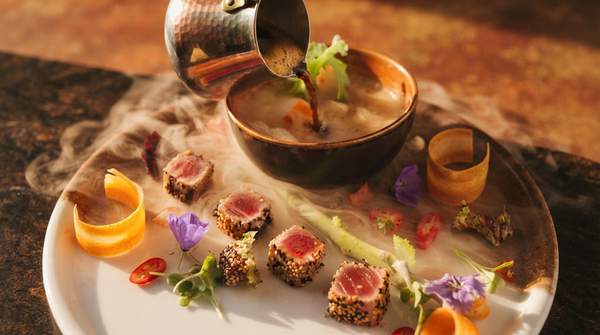
Tofu World makes the case for cold deliberately: cool temperatures highlight texture, clarity, and balance, which is why silken tofu with soy sauce or chili oil, chilled desserts, and summer appetizers work served cold. Texture also creates interest through contrast. The same source recommends pairing warm tofu with a cool sauce, chilled tofu with hot oil poured over, or hot dishes finished with a cold garnish—because, in its words, contrast wakes up the palate and adds complexity without extra ingredients.
Flavor Manipulation Decision Guide for Cooks
The framework below maps common culinary goals to the sensory lever best suited to achieve them, based on the mechanisms described above. Use it when a dish tastes close but not right: identify the goal, pull the indicated lever, and apply the technique.
| Desired Outcome | Primary Lever | Specific Technique | Scientific Reason |
|---|---|---|---|
| Enhance sweetness without adding sugar | Temperature | Serve the dish warmer, within a comfortable range | Warming strengthens the perceived intensity of sweetness, because taste pathways are temperature-sensitive |
| Enhance savory, aromatic depth (ginger, spice, fermented sauces) | Aroma via temperature | Serve hot; use stir-frying and braising to maximize volatile release | Heat makes volatile aroma compounds evaporate more readily, so aromas reach the nose faster and flavors feel fuller |
| Highlight clarity, delicacy, and texture | Temperature and texture | Serve cool or chilled (e.g., silken tofu, custards, summer dishes) | Cooling slows aroma release and highlights texture and balance |
| Add complexity without new ingredients | Texture and temperature contrast | Pair warm with cool: hot protein with cold garnish, chilled tofu with hot oil poured over | Contrast wakes up the palate and adds complexity through varied physical sensation and aroma release |
| Keep flavor consistent through a whole meal | Temperature maintenance | Slow heat loss rather than reheating later | As food cools, aroma release slows and fats firm; maintaining warmth avoids the flatness of the last bites |
| Build depth across a whole preparation | Thermal phasing | Heat to activate aroma, rest to stabilize structure, cool to draw in flavor, reheat gently to serve | Each phase changes volatile release and physical structure, shaping the final perception |
Two cautions apply. Different taste modalities respond to temperature differently, so warmth is not a universal amplifier—it specifically strengthens perceived sweetness and aroma within a moderate range. And the optimal serving temperature depends on the dish: what flatters a hot braise would ruin a chilled custard.
Mastering Flavor: A Holistic Approach to Culinary Excellence
The decision for any cook is to consciously manipulate temperature, texture, and aroma in cooking to achieve precise and desired flavor outcomes, moving beyond traditional recipe adherence. The evidence here supports a specific mindset shift: when a dish falls short, the answer is not always more seasoning. Sometimes it is changing the conditions—warming a dish to lift its sweetness and volatiles, cooling it to sharpen texture, or introducing contrast to wake up the palate.
The measurable indicator of success is simple to check: observe enhanced flavor balance, complexity, and diner satisfaction in dishes where these principles are applied. A dish engineered this way should taste fuller warm than the same food tastes cold, should hold its appeal to the last bite rather than fading, and should gain interest from contrast rather than from anything added to the shopping cart.