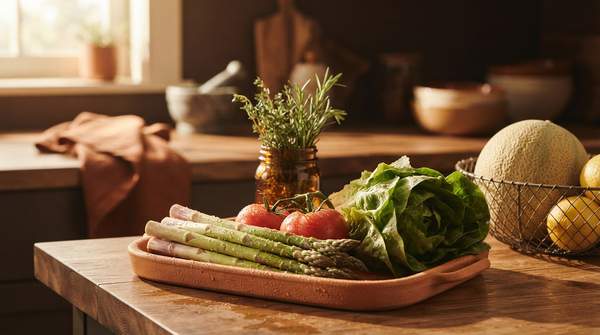
Want your fruits and vegetables to last longer? Stop memorizing storage lists and start thinking in variables. According to Double Up Food Bucks, five factors govern produce freshness: ethylene gas, temperature, airflow, light, and moisture. Once you understand those five, you can figure out where anything belongs—no lookup required. This guide covers whole, uncut produce with everyday household methods (no canning or dehydrating), and any shelf-life figures are estimates that depend on how fresh the item was when you brought it home.
Understanding the Five Pillars of Produce Preservation
Every storage decision you make is really a decision about five environmental levers. Ethylene is a gas given off by ripening fruits and vegetables—nature's ripening signal. Temperature controls how quickly spoilage happens. Airflow prevents moisture from pooling around produce, while moisture itself works both ways: too much invites rot, too little causes shriveling. Light rounds out the set, accelerating problems like sprouting in certain crops.
Wirecutter's produce guide quotes Emily Gove, a sales strategist in fresh produce at Equal Exchange, calling temperature, ethylene, and airflow "the big three" of storage. The other two variables—light and moisture—complete the picture. The trick is that every fruit and vegetable weighs these five differently, which is why, as Double Up Food Bucks puts it, "there's no golden rule you can apply to all fruits and vegetables."
Ethylene Gas: The Ripening Signal
Here's the single highest-impact move you can make: separate your ethylene producers from your ethylene-sensitive produce. Ethylene from one ripening fruit accelerates ripening in nearby produce, and certain items are super-producers. Double Up Food Bucks names onions, tomatoes, apples, and bananas as heavy emitters that can push broccoli, cabbage, and squash to ripen before their time.
The American Heart Association's storage guidance singles out apples for exactly this reason—store them away from other produce. And the sensitivity runs deep: writing on Sustainable Market Farming notes that in a high-ethylene environment, potatoes will sprout and carrots lose their sweetness and become bitter. Not everything is vulnerable, though—greens are largely unaffected and can share space with ripening tomatoes. A University of Florida IFAS Extension article by Hillary MacMichael suggests storing producers separately or in a designated ethylene-proof container.
Temperature Control: The Cold Truth
Cold slows spoilage, but it's not a universal cure. The IFAS Extension guidance is straightforward: tomatoes, avocados, and bananas belong on the counter, while leafy greens, berries, and most root vegetables should be refrigerated. The Heart Association adds that anything purchased pre-cut or peeled goes in the refrigerator, at 40 degrees Fahrenheit or below.
Timing matters as much as location. Queensland's Department of Environment, Science, Tourism and Innovation recommends keeping tomatoes at room temperature for one to five days until ripe, then refrigerating them only when fully ripe to preserve flavor and juiciness—taking them out thirty minutes before serving. Half Your Plate gives the same counter-then-fridge sequence for avocados, mangoes, melons, plums, peaches, and pears. And some produce actively dislikes the cold: the IFAS article warns that citrus and tropical varieties like bananas and pineapples are sensitive to chilling injury.
Airflow and Moisture: The Breath of Freshness
Sealing produce in plastic bags traps moisture and promotes rot, so the IFAS Extension advice is to use breathable containers or perforated bags for vegetables like broccoli, carrots, and cucumbers—proper airflow reduces moisture buildup and prolongs freshness. Reusable mesh bags work well.
But don't swing too far the other way. Wirecutter notes that most refrigerated produce actually stays fresh longer when sealed in zip-top bags, silicone pouches, or lidded containers, which hold in moisture to prevent dehydration and shield sensitive items from ethylene. The crisper drawer is your humidity dial: the IFAS article recommends high humidity settings for leafy greens and low humidity for fruits like apples and pears. Project FoodBox's care guide adds a practical rule for greens—wash, dry thoroughly, and store with a paper towel, because moisture causes faster spoilage.
Light Exposure: The Hidden Factor
Light is the quietest of the five variables, but it matters for storage crops. The clearest case is potatoes: Sustainable Market Farming advises keeping white potatoes in the dark both while curing and during storage, because they have exacting temperature requirements and will sprout otherwise. Half Your Plate likewise points to "a cool, dark and dry place" as one of the three standard storage locations alongside the countertop and fridge.
For most refrigerator and counter items, light is a minor player compared with ethylene and temperature. But if you're storing roots, tubers, or squash for more than a few days, darkness belongs in your plan—especially anywhere a potato might sit long enough to sprout.
Your Produce Preservation Playbook: A Quick-Reference Guide
Here's the payoff: each row below applies the five variables to a common item, so you can look up what's in your kitchen and know exactly where it goes and why. The reasoning is simple—identify the item's ethylene role, its temperature tolerance, and its moisture needs, then match the location.
| Produce | Location | Ethylene Role | Moisture Needs | Key Tip |
|---|---|---|---|---|
| Tomatoes | Counter until ripe, then fridge | Producer | Keep dry; wash just before using | Room temperature 1–5 days; refrigerate only when fully ripe; rest 30 minutes before serving |
| Apples | Counter up to a week, fridge longer | Producer | Low-humidity crisper | Store away from all other produce |
| Avocados | Counter until ripe, then fridge | Producer | Keep dry | Ripen at room temperature; refrigerate once ripe for longer storage |
| Bananas | Counter | Producer | Keep dry; let breathe | Chilling-sensitive; keep away from other produce |
| Leafy greens | Fridge, high-humidity crisper | Largely unaffected | Wash, dry thoroughly, store with paper towel | Use first—most perishable item in the basket |
| Berries | Fridge | Sensitive | Keep dry until use | Use early in the week alongside greens |
| Root vegetables (carrots, celeriac) | Fridge or cold storage | Sensitive | High humidity prevents shriveling | Cornell Cooperative Extension notes celeriac needs 90–98% relative humidity and shouldn't share space with ethylene producers |
| Potatoes | Cool, dark, dry place | Sensitive—will sprout | Keep dry | Darkness during curing and storage prevents sprouting |
| Broccoli, cabbage, cucumber | Fridge, ventilated container | Sensitive | Breathable storage; avoid sealed plastic | Perforated bags allow airflow and reduce moisture buildup |
Notice the pattern: producers and sensitive items never share a drawer, perishables get the cold and the front of the queue, and storage crops get dark, dry, breathable quarters. That's the whole framework in one glance.
Making Smart Storage Decisions for a Fresher Kitchen
By understanding and applying the five key principles of produce preservation—managing ethylene gas, temperature, airflow, light, and moisture—home cooks can significantly extend the shelf life of their fresh fruits and vegetables. Project FoodBox frames proper storage as a way to preserve vitamins and antioxidants, prevent spoilage and waste, and improve flavor and texture, and Queensland's waste-reduction effort ties household storage habits directly to its goal of halving Australia's food waste by 2030.
Your measurable indicator is simple: reduced frequency of spoiled produce in the refrigerator or pantry, and a noticeable decrease in household food waste. Start with the two highest-impact moves—separating ethylene producers from sensitive items, and moving ripe counter fruit into the fridge—then check your compost bin in two weeks. If less is going in, the framework is working.
Sources
- Tips for Storing Fruits and Vegetables - Double Up Food Bucks — Double Up Food Bucks | Michigan
- How to Keep Your Produce Fresh for Weeks (Hint: It’s Not Always in the Fridge) — Wirecutter: Reviews for the Real World
- HEART
- The best storage conditions for different types of vegetables – Sustainable Market Farming
- Keep It Fresh - UF/IFAS Extension Orange County
- DETSI
- How Do I Store My Fruits And Veggies So They Last As… — Half Your Plate
- Fresh Produce Care Guide | Maximize Freshness and Health — Projectfoodbox
- Rvpadmin