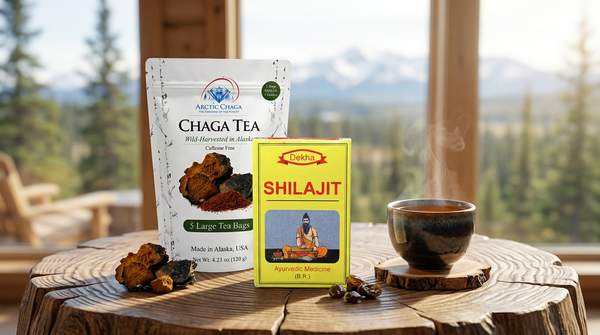
A pea-sized portion of Shilajit looks very different from the teas, mushroom powders, and tinctures that fill most wellness shelves. It is thick and resinous, then dissolves when stirred into a warm drink.
Arctic Chaga keeps that physical character intact with its Himalayan Shilajit Resin. The product is sourced from high-altitude regions of the Himalayas, imported directly from Nepal, and sold as a 50 g jar of true resin rather than a powder or diluted liquid.
The Resin Form Is Part of the Experience
Shilajit resin has a tactile quality that makes the product immediately recognizable. Arctic Chaga describes its version as thick and tar-like, with enough body that it does not simply drip or run like a thin liquid.
That gives the jar a very different feel from opening a bag of extract powder. You remove a small amount from the resin itself, dissolve it into a warm drink, and watch the dense material become part of the liquid.
For someone who specifically wants Shilajit in resin form, that texture is central to the purchase. It is the format you are choosing, not simply a presentation detail.
The Journey Begins in the Himalayas
Arctic Chaga sources its Shilajit from high-altitude Himalayan regions and imports it directly from Nepal. That gives the product a defined geographical origin instead of relying on “Himalayan” as a broad wellness label.
Provenance carries real weight with a product like Shilajit because the material itself begins with its source. Arctic Chaga identifies both the mountain region and the country connected to the resin in the jar.
That gives the product a more tangible identity before preparation even begins. You know where the material comes from and the physical form in which it reaches you.
Low-Heat Purification Adds Another Layer
Origin is only one part of the product. Arctic Chaga uses low-heat traditional purification methods and specifies that the finished resin contains no fillers, additives, or synthetic processing.
The same product information describes purification intended to remove heavy metals and contaminants. Those details add another layer between Himalayan sourcing and the finished 50 g jar.
Together, source, form, and handling give you several concrete points to assess. The resin does not need a long list of decorative wellness language to explain what makes this particular product recognizable.
A Small Portion Is All the Serving Requires
The jar may contain 50 g of resin, but each serving is much smaller. Arctic Chaga directs you to use a pea-sized amount of approximately 300 to 500 mg.
That scale makes more sense once you see the texture. You are not scooping out a spoonful or measuring a large powder serving; the amount is compact enough to sit on the end of a utensil before going into your drink.
Following the stated serving also keeps preparation suited to the product. Shilajit Resin has its own handling and portion size rather than behaving like another scoopable drink powder.
From Jar to Cup Takes Only a Few Steps
The unfamiliar texture can make Shilajit look more complicated than it is to prepare. Arctic Chaga’s directions move the resin from jar to cup in three steps.
- Remove a pea-sized portion of approximately 300 to 500 mg.
- Add it to warm, not boiling, water, tea, or milk.
- Stir until the resin dissolves, then use it according to the product directions.
Warm liquid does the practical work of dispersing the dense resin. The preparation preserves the product’s distinctive form right up until the moment it becomes part of the drink.
Water Keeps the Experience Simple
Warm water is the most direct way to prepare the resin because very little competes with the Shilajit itself. You can see how it dissolves and get familiar with its character before adding it to a stronger-tasting drink.
That can make sense for an early serving when the resin format is still new. The product stays easy to observe rather than disappearing into several other ingredients.
Once the texture and preparation feel familiar, the same serving can move into tea or milk. The jar stays the same while the cup can change.
Tea Gives Shilajit a Familiar Setting
Tea creates a natural setting if warm drinks are already part of your day. A pea-sized serving can dissolve into a cup you were already planning to make rather than requiring a separate preparation routine.
This also gives Himalayan Shilajit Resin a natural place within Arctic Chaga’s wider catalog without turning it into another Chaga product. The resin keeps its Nepal sourcing, mineral origin, and distinct physical form even when tea becomes the serving base.
That separation keeps both products recognizable. Shilajit remains Shilajit, and the drink simply becomes the way you choose to prepare it.
Milk Creates Another Preparation Route
Warm milk is another option in Arctic Chaga’s directions. It gives the resin a softer, more substantial base than plain water while keeping the preparation compact.
Temperature remains the practical detail to remember. The directions call for warm rather than boiling liquid, so the small resin portion can be stirred into the drink until dissolved.
Water, tea, and milk therefore create three straightforward choices from the same jar. You can vary the cup without changing the product you bought.
Shilajit Expands the Arctic Chaga Shelf in a Different Direction
Most of Arctic Chaga’s catalog begins with mushrooms, especially wild-harvested Chaga from Interior Alaska. Himalayan Shilajit Resin brings in a product with a completely different geography, texture, and preparation style.
The connection is in the attention paid to source and physical form. Arctic Chaga leaves the Shilajit recognizably resinous and identifies its Himalayan and Nepal provenance rather than trying to make it resemble mushroom coffee or an extract powder.
That gives Shilajit its own place in the catalog. Someone already interested in source-conscious natural products can consider a Nepal-sourced resin without asking it to behave like Arctic Chaga’s mushroom range.
The Jar Gives You Plenty to Evaluate
This product already has a substantial identity before any broader wellness promise enters the conversation. You can evaluate its high-altitude Himalayan source, direct Nepal import, true resin form, low-heat purification, 50 g jar, and 300 to 500 mg serving.
Those details describe the product you will actually open, portion, dissolve, and drink. They also give you more useful buying information than vague language about what Shilajit is supposed to transform.
The result is a product with a strong sense of place and form. The appeal starts with what is in the jar and how it moves into the cup.
Frequently Asked Questions
Where does Arctic Chaga Himalayan Shilajit Resin come from?
Arctic Chaga sources its Himalayan Shilajit Resin from high-altitude regions of the Himalayas and imports it directly from Nepal. The product is sold in true resin form rather than as a powder or diluted liquid.
What does Arctic Chaga Himalayan Shilajit Resin look like?
Arctic Chaga describes its Shilajit as thick and tar-like. The dense resin is intended to dissolve into warm liquid before use.
How much Arctic Chaga Himalayan Shilajit Resin is used per serving?
Arctic Chaga directs you to use a pea-sized amount of approximately 300 to 500 mg. The product comes in a 50 g jar, so each serving uses only a small portion of the resin.
What can Arctic Chaga Himalayan Shilajit Resin be mixed with?
Arctic Chaga recommends dissolving the resin in warm, not boiling, water, tea, or milk. Stir the pea-sized serving into the liquid according to the product directions until it dissolves.
Bring the Resin From Jar to Cup
Himalayan Shilajit Resin earns attention through details you can see and use: Nepal sourcing, thick resin form, low-heat purification, a pea-sized serving, and simple warm-drink preparation.
Check the Arctic Chaga Himalayan Shilajit Resin if that source, format, and preparation style fit the kind of wellness product you want to bring into your cup.