Panzani and Cerealis announced on 16 October 2026 that they have entered exclusive negotiations to merge, creating a European food group with approximately €1 billion in combined annual revenues and an enterprise value of around €1.8 billion. The proposed group would employ nearly 1,800 people and would be backed by Cerealis' founding families, the Belgian holding Sofina and CVC Capital Partners, according to the companies' announcement.
Panzani and Cerealis Merge to Form New €1 Billion European Food Group
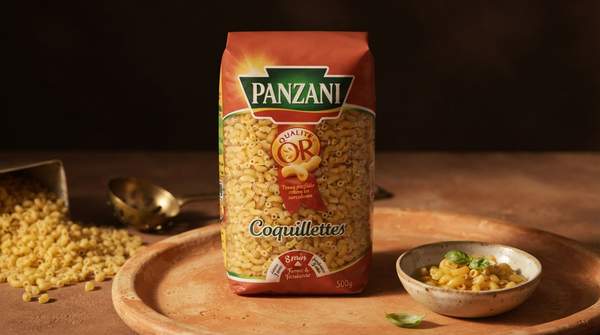
The deal, announced from Porto, would bring together two established European food manufacturers with what the companies describe as complementary geographical footprints, product portfolios and industrial expertise. Panzani, headquartered in Lyon, is a European dry grocery player operating in France, the Netherlands and Central Europe, primarily in dry pasta, couscous and sauces. It runs three industrial sites and three semolina mills in France and employs 900 people, generating revenues of €620 million in 2025. The group is controlled by CVC Capital Partners.
Cerealis, the Portuguese partner in the transaction, brings its own industrial base across Portugal, Spain and the Czech Republic. The combined revenue figure of roughly €1 billion implies that Cerealis contributes approximately €380 million on top of Panzani's €620 million, though the companies have not published a standalone Cerealis revenue figure in the announcement. The transaction remains a proposed merger under exclusive negotiation rather than a finalized deal.
Panzani-Cerealis Merger: A Complementary Union
The strategic logic of the merger becomes clear when the two companies' pre-merger profiles are set side by side. Their product ranges overlap only at the edges, and their geographic strongholds barely intersect, which is precisely what executives say makes the combination attractive.
| Dimension | Panzani Group | Cerealis |
|---|---|---|
| Primary geography | France, the Netherlands and Central Europe | Portugal, Spain and the Czech Republic |
| Key product categories | Dry pasta, couscous and sauces | Pasta, breakfast cereals, cereal bars, biscuits and flour |
| Primary financial backer (pre-merger) | CVC Capital Partners (controlling shareholder) | Founding families Moreira Da Silva and Silva Domingues, together with Sofina |
Read together, the two columns show how the pieces fit: Panzani's pasta, couscous and sauces business, anchored in France and Central Europe and backed by a private equity controller, complements Cerealis' broader cereal-based portfolio in Iberia and the Czech Republic, held by founding families and Sofina. The result, if the deal completes, is a pan-European supplier spanning pasta, couscous, sauces, cereals, cereal bars, biscuits and flour, with established brands positioned to enter new European markets through the partner's existing footprint.
Financial Backing and Leadership Structure
The ownership mix behind the new group is notable for combining three distinct types of shareholder. CVC Capital Partners, which controlled Panzani before the deal, would retain a stake in the combined business, according to Bloomberg reporting on the transaction. Sofina, the Belgian listed holding company, and the Moreira Da Silva and Silva Domingues families, who controlled Cerealis, would join them as backers of the new entity.
On leadership, Pedro Moreira da Silva, currently Executive Vice-Chairman of Cerealis, would provide overall leadership for the combined group. Panzani's Mathieu, quoted in the announcement, emphasized an "independent pan-European" ambition while pointing to continuity for Panzani's stakeholders, including its French roots, operations, brands and commitment to its agricultural durum wheat partners.
Ambitions for Growth and Resilience in the European Market
Executives framed the merger as a growth project rather than a consolidation exercise. "The main driver of this transaction is the opportunity to build on highly complementary product ranges, technologies and expertise," said Pedro Moreira da Silva. "Panzani and Cerealis share the same entrepreneurial culture, a long-term commitment to their brands and markets, and a common ambition for growth. It will strengthen our capacity for innovation and create new growth opportunities for both companies."
Mathieu's statement pointed to the resilience argument at the heart of the deal: "By joining forces with Cerealis, we would build an independent pan-European player that is more diversified, stronger and more resilient, while preserving what defines our identity: our French roots, our operations, our brands and our commitment to our agricultural durum wheat partners. It is a growth project for both our teams and our partners." The diversification claim rests on the combined portfolio across staple categories and the widened geographic reach across France, Iberia, the Netherlands, Central Europe and the Czech Republic.
Next Steps: Regulatory Approvals and Integration
The transaction is not yet complete. It remains subject to receiving the necessary regulatory approvals and to "consultation of the relevant employee representative bodies," according to the announcement. That means employee representatives in the affected jurisdictions will be consulted before the merger can be finalized, and competition authorities will need to clear the combination.
The companies have not stated a target closing date, and the announcement does not address specific job impacts or facility changes. What is on record is the proposed structure: a group of nearly 1,800 employees, roughly €1 billion in consolidated annual revenues and an enterprise value of approximately €1.8 billion, built from Panzani's 900-strong French-centered workforce and Cerealis' operations across three countries.
Outlook: A New Force in European Food
The merger creates a significant new player in the European food sector, poised for growth through diversified product offerings and expanded geographic reach. For customers, agricultural partners and competitors, the practical significance lies in the combination of Panzani's durum wheat supply relationships and dry grocery strength with Cerealis' cereal-based brands across Iberia and Central Europe, all under a single ownership structure blending private equity, family and listed holding capital.
The measurable indicator to watch is the finalization of the merger following regulatory approvals and employee consultations. Until those steps conclude, the €1 billion group remains a proposed entity, and its stated ambitions for innovation, diversification and pan-European growth will stay conditional on the deal clearing both its workforce consultation and its regulatory review.
Sources
- Panzani and Cerealis Join Forces to Create a Major European Food Group — EQS NEWS
- Panzani & Cerealis Merge Into €1B Food Group — Food & Beverage Magazine
- Panzani and Cerealis Join Forces to Create a Major European Food Group — Yahoo Finance
- Cerealis eyes deal with French pasta group Panzani — Just Food