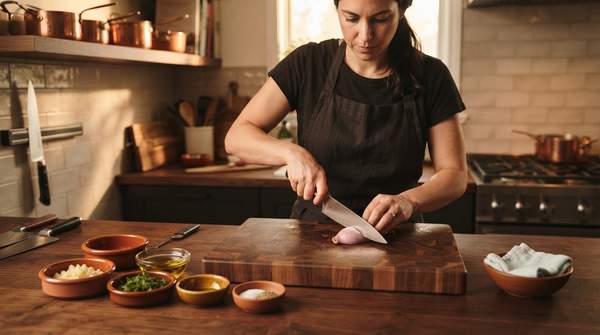
Want to cook like a pro? It's less about fancy equipment and more about three habits: mise en place, knife discipline, and sanitation flow. Professional kitchens follow strict standards for a reason, and the habits chefs rely on translate directly to the home kitchen—less stress, fewer accidents, and better food on the plate.
The Professional Kitchen Mindset for Home Cooks
Here's the thing I love about professional cooking: the difference is rarely expensive equipment. It often comes down to simple habits practiced every single day, as one guide to professional household cooks puts it. A well-managed kitchen creates better meals, saves time, and reduces stress.
Professional cooks never start without a plan. They review recipes, check ingredients, and prepare everything in advance. Culinary training builds on the same foundation—gathering and preparing ingredients, and keeping a clean, organized workspace. The good news? None of this requires certification or special gear. These are foundational habits, not advanced techniques, and any home cook can adopt them starting tonight.
Mise en Place: The Foundation of Efficiency
"Mise en place" is French for "everything in its place," and it refers to a chef's kitchen setup. That means gathering and prepping every ingredient before heat ever touches a pan—chopped onions measured out, spices lined up, tools ready.
Why bother? The practice lowers stress, increases efficiency and accuracy, and improves the quality of your food. Think about the last time a recipe went sideways: probably a moment of scrambling for a missing ingredient while something burned. Mise en place eliminates that scramble entirely. Chefs say home cooks should avoid starting to cook before prep is done, and it's easy to see why—cooking becomes a calm assembly process instead of a race against the clock.
Knife Discipline: Safety Through Sharpness
This one surprises people: a sharp knife is a safe knife. Experts say regularly sharpening knives and maintaining the blade helps reduce the risk of cuts and improves overall cooking efficiency. Why? A dull blade requires more force, and more force means less control—and a higher chance the knife slips where you didn't intend.
Maintenance is simpler than you might think. Use a honing rod to straighten the blade edge before each use. When honing no longer restores the edge, take the knife to a professional sharpener. Hand-wash and dry knives before storing them, keep them in a knife-safe container that won't dull the blade, and never use kitchen knives to cut materials they weren't intended for. No specific brands needed—just consistent care.
Sanitation Flow: Preventing Cross-Contamination
Cross-contamination is a major concern in any kitchen. Using the same cutting board for raw meat and vegetables can spread bacteria and increase the risk of foodborne illness. And it's not just a meat problem—health expert Christine Lusita told Fox News Digital that "cross-contamination can happen with more than just meat." The Mayo Clinic warns that food can become contaminated at any stage of preparation, and unclean tools and surfaces can transfer harmful germs.
The professional fix is straightforward: separate cutting boards for raw proteins and produce, clean hands, and proper cooking temperatures—habits professional household cooks treat as non-negotiable. Cleaning as you go is also key to preventing the spread of bacteria. Professional kitchens typically rely on reusable cloth towels for surfaces, changed frequently, rather than burning through rolls of paper towels.
Integrating Professional Kitchen Habits: A Decision Framework
Here's where it all comes together. The table below maps each professional principle to a concrete action and the failure point to avoid, so you know what to do before, during, and after cooking.
| Habit | Professional Rationale | Home Kitchen Action | Common Pitfall |
|---|---|---|---|
| Mise en Place | Saves time, reduces stress, prevents mistakes, and improves food quality and accuracy. | Prep and measure all ingredients, and ready all tools, before you start cooking. | Starting to cook before prep is finished, forcing mid-recipe scrambling. |
| Knife Discipline | A sharp knife needs less force and offers more control, reducing the risk of slipping and cuts. | Hone the blade before each use; get it professionally sharpened when honing no longer restores the edge. | Using dull knives, which require more force and increase the likelihood of slips and cuts. |
| Sanitation Flow | Shared tools can spread bacteria and cause foodborne illness; contamination can happen at any prep stage. | Use separate cutting boards for raw proteins and produce; clean as you go with frequently changed towels. | Using one cutting board for everything, from raw meat to vegetables. |
Read it as a sequence: setup first, sharp and controlled cutting second, continuous cleaning throughout. That's the professional workflow, compressed into a home kitchen session.
Making Habits Stick: Overcoming Common Challenges
The hardest part isn't knowing these habits—it's doing them every time. The most common failure point for mise en place is skipping the plan when you're tired or rushed, exactly when the habit helps most. So start small: pick one recipe this week and prep it fully before turning on the stove.
Build the others in gradually. Hone your knife while the pan preheats—that's ten seconds, not a chore. Assign one cutting board to raw meat permanently so the decision is already made. Remember, this is general home-cooking guidance, not professional training, and it doesn't cover advanced techniques. But the foundation is the same one professionals build on.
Your Path to a More Professional Home Kitchen
Commit to consistently applying mise en place, knife discipline, and sanitation flow in your daily cooking routine. The measurable indicator that it's working: a noticeable reduction in cooking time, fewer kitchen accidents, and consistently higher quality food outcomes. Watch for those three signals over your next few meals—when dinner comes together without the scramble and without the close calls, you'll know the habits have taken hold.