A great cocktail is not assembled; it is engineered. Every stirred Negroni or shaken Daiquiri is a system of interacting tastes, escaping aromatics, melting ice, and shifting textures, and each of those variables is one a bartender can control. The practical core of flavor science is simple: taste buds register sweet, sour, bitter, salty, and umami, while volatile aromatic compounds travel retronasally through the back of the mouth to the olfactory system, and together these channels produce what food scientist Lisanne van der Kooi describes as the combined sensory experience of flavor. Understanding which lever moves which perception is what turns recipe-following into deliberate design.
The Science of Cocktail Flavor: A Sensory Blueprint
As The Art of Shaking frames it, cocktails carry "an invisible layer that makes them truly remarkable: science," where every stir, shake, and ingredient selection is governed by chemistry, physics, and human perception. That framing is useful because it reframes the bartender's job: a drink is not a fixed formula but a moving target whose character changes with temperature, dilution, and time. A well-built cocktail can be read through three pillars, each answering a different question. The Base asks what the spirit contributes. The Balance asks how sweet, sour, and bitter tastes interact. The Finish asks what aromatics, temperature, and texture deliver after the first impression fades.
Pillar 1: The Base – Character of the Spirit
The base spirit is the drink's foundation, and as Provi's Corey Hines notes, classics like the Martini, Negroni, and Daiquiri prove that structure matters more than ingredient count. The spirit carries the concentrated aromatic compounds that define the drink's character, whether botanical, oaked, or sugarcane-derived, and every later addition exists in relation to it. This is why ratio thinking precedes flavor thinking: the same modifier reads differently against a bold, high-proof spirit than a lighter one. Because the spirit also supplies most of the drink's alcohol, it sets how much aromatic material is initially locked in the alcohol matrix, which determines how much dilution will be needed later to release it.
Pillar 2: The Balance – Sweet, Sour, and Bitter Interactions
Balanced drinks follow a principle borrowed from the kitchen: just as acids need fat or sweetener to become balanced in cooking, sour ingredients in a glass need sweetness to keep them from turning sharp. The Art of Shaking makes the interaction model explicit: sweetness, acidity, bitterness, and alcohol do not exist in isolation but interact in ways our palates perceive differently depending on ratios, order of mixing, and temperature. Citrus brightens a spirit, sugar softens bitterness, and bitters can enhance aroma without adding sweetness. The practical consequence is that a drink can be out of balance even when no single ingredient tastes wrong, because the perception of each taste shifts in the presence of the others.
Pillar 3: The Finish – Aromatics, Temperature, and Texture
The finish is where cocktails become multi-sensory. Garnishes do real work: aromatic herbs, citrus twists, and spices release essential oils and volatile compounds that the nose detects before the taste buds fully engage, and this layered input is what creates what The Art of Shaking calls the illusion of complexity and depth. Texture belongs in the same pillar. Viscosity, carbonation, and frothiness change how a drink is experienced, and the way a cocktail glides across the tongue can evoke entirely different sensations even when the ingredients remain identical. Technique is the control surface here—shaking vigorously, stirring gently, or blending each produces a different physical experience.
Mastering Temperature and Dilution for Flavor Release
Temperature and dilution are the most underused levers behind the bar. Van der Kooi explains the mechanism: heat increases the volatility of aromatic compounds, releasing stronger aromas, while cold slows the activity of key ion channels in taste receptors, decreasing perceived sweetness and bitterness. Cold drinks therefore taste less sweet and less bitter at the same sugar content—the suppression is perceptual, not chemical, as Headcount Coffee puts it: temperature dampens receptor sensitivity while "the sugar remains."
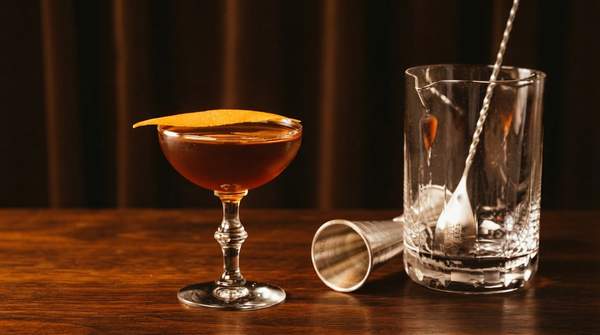
Dilution works the opposite direction on aroma. As a cocktail dilutes and its ABV drops, lighter molecules are freed from the alcohol matrix and escape into the air, which is why a stirred, diluted drink often smells far more aromatic than the undiluted liquid in the bottle. That same water comes from ice, and ice quality matters: crystal-clear cubes preserve purer flavors, while cloudy ice carries minerals, impurities, and air bubbles—calcium, magnesium, and potassium from the water—that can affect a drink's balance. The Art of Shaking adds that a slow-melting cube preserves intended balance while crushed ice accelerates dilution and alters mouthfeel, so ice choice is a flavor decision, not a styling one.
Cocktail Flavor Design Framework
Use this matrix to design a drink or diagnose one that misses the mark: identify the pillar that is failing, then adjust only the variables in that row before retasting. Make Me a Cocktail's style-by-style temperature priorities show how the same framework shifts by drink type.
| Sensory component | What controls it | Adjustment when the drink is… | Evidence note |
|---|---|---|---|
| Taste balance (sweet/sour/bitter) | Ratios, order of mixing, temperature | Too sharp: add sweetness; too flat: add acid; too harsh: soften bitterness with sugar | Tastes interact; perception depends on ratios and temperature |
| Sweetness perception | Serving temperature | Cold suppresses perceived sweetness and bitterness; warm drinks read sweeter at the same sugar level | Cold slows taste-receptor ion channels—a perception shift, not a chemical change |
| Aroma | Dilution and garnish oils | Muted aroma: dilute further to free volatiles from the alcohol matrix; add aromatic garnish | Dilution releases lighter aromatic compounds as ABV drops |
| Temperature and dilution rate | Ice size, clarity, and style of drink | Martini-style: very cold with controlled dilution (risk: aroma muted); Old Fashioned-style: cool, slowly evolving (risk: large ice over-dilutes); Sour: cold, bright, aerated (risk: warmth exposes excess sweetness) | Optimal temperature depends on the beverage format and desired sensory profile |
| Texture | Shaking vs. stirring vs. blending; ice purity | Cloudy ice introduces mineral impurities that alter flavor; crushed ice accelerates dilution and changes mouthfeel | Clearer ice yields purer flavor; technique changes the physical experience |
The framework is sequential by design: fix the Base ratio first, then the sweet/sour/bitter balance, then the finish. Changing all three at once makes it impossible to know which adjustment worked. For non-alcoholic drinks, the same pillars apply, though Bols notes that a convincing adult option must also replicate the mouthfeel, burn, and lingering finish that alcohol normally provides.
Achieving Intentional Flavor: Your Next Steps
Apply the scientific principles of taste, aroma, temperature, and texture to intentionally design or adjust cocktails for desired sensory outcomes: choose a base and ratio, balance the tastes, then tune the finish with ice, dilution, and technique. The measurable indicator of success is a noticeable improvement in the balance, complexity, and aromatic profile of your crafted cocktails, confirmed by sensory evaluation. A practical way to check it: make two identical drinks, dilute one further than the other, and taste them side by side—the more dilute glass should smell noticeably more aromatic while tasting less sweet, which confirms both mechanisms at work. That single comparison teaches more about cocktail science than any recipe card.
Sources
- How Temperature Affects Beverage Flavour Perception - Food Scientist for Hire
- The Hidden Science Behind Every Great Cocktail — The Art Of Shaking
- Beyond the Bar: Unraveling the Chemistry of Cocktails — PROVI
- Cold Temperatures Suppressed Sweetness Perception in Drinks — Headcount Coffee
- How Temperature Changes the Taste and Balance of a Cocktail - Blog post - Make Me a Cocktail
- The evolution of cocktail ingredients and flavor profiles: A mastercla — Bols Cocktails