If you want a rye cocktail that matches your taste for spice, sweetness, and complexity, the choice comes down to three classics. The Manhattan leans sweet and herbal through its sweet vermouth, the Sazerac layers anise and herbal aromatics over a dry rye base, and the Old Fashioned keeps things spirit-forward with sugar and bitters in a supporting role. Each drink takes the same peppery backbone of rye whiskey and bends it in a different direction.
The Enduring Appeal of Rye Whiskey Cocktails
What makes rye whiskey such a productive base for classic cocktails is the structure it brings to the glass. Smoky Valley Distillery's cocktail notes describe the spirit's role in terms of spice and warmth tying a drink together, which is exactly why the spirit thrives in stirred, spirit-forward serves where its character cannot hide behind mixers. Rye's peppery bite gives a cocktail backbone, while the accompanying sweeteners and bitters decide how much of that bite reaches the drinker.
Tasting Table's Autumn Swiers frames the same distinction in comparative terms: bourbon creates a sweeter, richer taste in a cocktail, while rye lends a more peppery note. That single difference explains why three drinks built on nearly identical skeletons—a spirit, a sweetener, and bitters—can diverge so widely in the glass. The comparison below holds the rye constant and lets the supporting cast do the differentiating work.
Manhattan: A Sweet and Spicy Classic
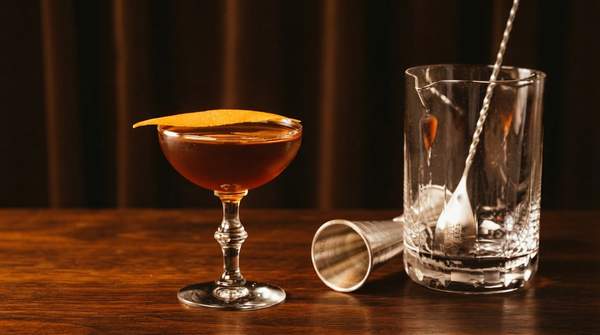
The Manhattan pairs rye whiskey with sweet vermouth, and that pairing is what defines the drink. Writing for New Riff Distilling, Annika Bontrager recommends pairing classic American rye with a sweet vermouth, and notes that some drinkers feel a bourbon base adds too much sweetness to the cocktail. Rye remains the traditional choice, but the vermouth is where the personality is set.
That vermouth choice is the drink's main tuning dial. Bontrager suggests that splitting the vermouth between sweet and dry styles yields what New Riff calls a "Perfect Manhattan," which illustrates how directly the vermouth shapes sweetness and herbal complexity. The Epicurean Trader's overview ties the drink to rye whiskey's nineteenth-century New York identity and notes the cherry garnish that finishes the serve. Compared with its rivals below, the Manhattan is the sweet-leaning, herbal option of the three.
Sazerac: New Orleans' Herbal Elixir
The Sazerac keeps the rye base but strips the sweetness down to a sugar cube, then adds the two elements that make it unmistakable: Peychaud's bitters and an absinthe rinse. Smoky Valley Distillery describes the result as "complex, layered, and steeped in history," with the absinthe rinse adding "an herbal mystery" and the Peychaud's contributing a distinctive anise-floral note. The rye ties it together with spice and warmth.
Technique matters here in a way it does not in the other two drinks. Smoky Valley Distillery's recipe notes insist on expressing lemon peel oils over the surface and then discarding the peel—the drink wants the perfume, not the fruit. Elixiary's drink guide, compiled by Abolfazl Shirkavand, adds the serving details: stirred and served cold with no ice, which concentrates the aromatics. The absinthe is a rinse rather than a pour, so it contributes aroma rather than direct flavor. Historically, cognac anchored the drink and gave a softer profile, according to that same guide.
Old Fashioned: The Spirit-Forward Standard
The Old Fashioned is the bare-bones option, and that is its virtue. Shirkavand's comparison traces the drink to the original 1806 definition of a cocktail—spirit, sugar, water, and bitters—and the modern build barely departs from it. His guide describes the typical version as bourbon and Angostura bitters served over a large ice cube with an orange peel; making it with rye instead simply sharpens the spice.
Because the supporting cast is minimal, this is the drink where you taste the whiskey itself most directly. Kevin Lawton, writing on RyeCentral, characterizes the rye Old Fashioned as spirit-forward and dry, with demerara syrup as the sweetener and Angostura as the bitters. The amounts of sugar and the choice of bitters are adjustable, so the drinker controls the balance—but nothing in the recipe disguises the base spirit.
Choose Your Classic Rye Cocktail
The matrix below sorts all three drinks along the same three dimensions—how the base spirit contributes, what supplies the sweetness and aromatics, and the resulting character—so you can match a drink to your own preferences before you pour.
| Cocktail | Base spirit contribution | Sweetness & aromatics | Overall character |
|---|---|---|---|
| Manhattan | Rye's structure and spice, though bourbon is also used | Sweet vermouth adds richness; the vermouth choice sets sweetness and herbal complexity; often garnished with a cherry | Sweet-leaning and herbal, stirred and served up in a coupe |
| Sazerac | Rye whiskey as the base; cognac was used historically for a softer profile | Absinthe rinse (aromatic, not poured) plus Peychaud's bitters for anise and floral notes; sweetness limited to a sugar cube | Spicy, herbal, and slightly bitter; stirred and served without ice to concentrate the aromatics |
| Old Fashioned | Rye showcased directly; often made with bourbon, but rye is the spicier choice | Sugar (typically syrup) balanced by Angostura bitters; both adjustable to taste | Spirit-forward and dry, served over a large ice cube with an orange peel |
Reading the matrix as a decision tool: if you want sweetness and are drawn to herbal complexity, the Manhattan's vermouth-forward profile is your drink, and the drier the vermouth you choose, the drier the result. If you want complexity without sweetness, the Sazerac's absinthe-and-Peychaud's aromatics layered over a sugar cube deliver it—Lawton calls it anise-tinged and dry—but it is the most technically demanding of the three, and Smoky Valley Distillery's notes caution it is not a beginner cocktail to make. If what you really want is to taste the rye itself, the Old Fashioned intervenes least between bottle and glass.
Two boundaries on this comparison: it covers the general, representative builds rather than specific whiskey or vermouth brands, and countless variations of each recipe exist. The historical notes are brief overviews, not exhaustive histories.
Your Next Rye Cocktail Decision
Select a classic rye cocktail based on your preference for spice, sweetness, and complexity, using the decision framework above. Concretely: choose the Manhattan if you want the sweetest, most vermouth-driven serve; the Sazerac if you want herbal, anise-scented complexity and don't mind the extra technique; and the rye Old Fashioned if you want the spirit itself front and center. The success check is simple and measurable—you will know the framework worked when you have successfully prepared and enjoyed a chosen rye cocktail that matches your taste profile, and the character you taste in the glass corresponds to the matrix row you selected it from.
Sources
- Classic Rye Whiskey Cocktails — Smoky Valley Distillery Recipe — Smokyvalleydistillery
- The Difference Between The Sazerac And Old Fashioned Cocktails Is All In The Whiskey - Tasting Table
- Is a Manhattan Cocktail Better with Bourbon or Rye? - New Riff — New Riff Distilling
- 5 Classic Rye Whiskey Cocktails You Can Make At Home — The Epicurean Trader
- Sazerac vs Old Fashioned: What's the Difference? — Elixiary
- Old Fashioned vs Sazerac: Two Rye Originals Compared — RyeCentral