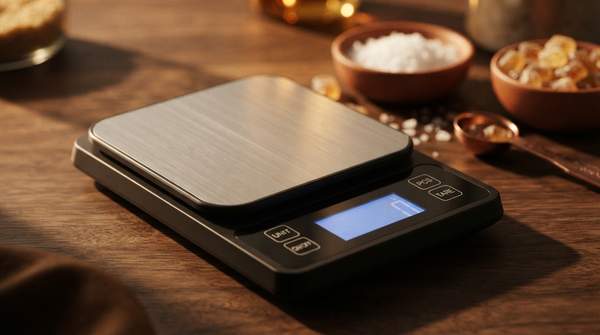
There is no single "best" kitchen scale, and that's the whole point. The scale that changes your sourdough is not the scale that improves your pour-over. After weighing what testers and bakers actually report, the honest answer is a decision, not a product: match your most frequent task — big doughs, everyday baking, or gram-level coffee work — to the features that task demands. Here's how five models stack up, and how to choose between them.
Why Your Kitchen Needs a Scale (and Not Just Any Scale)
Start with the case for weighing at all. Bon Appétit's Alaina Chou ran a simple experiment with senior editor Noah Kaufman: one batch of cookies made with flour scooped straight from the bag, another with flour spooned and leveled into a measuring cup. The batches turned out completely different, because scooped flour packs more densely — you end up with more flour than the recipe calls for, and that changes the finished product.
America's Test Kitchen makes the same point more bluntly: no matter what you're cooking or baking, weighing ingredients helps guarantee consistent results — but only if your scale is accurate and easy to use. So the real question isn't whether to buy a scale. It's which one, and that depends on what you make most often.