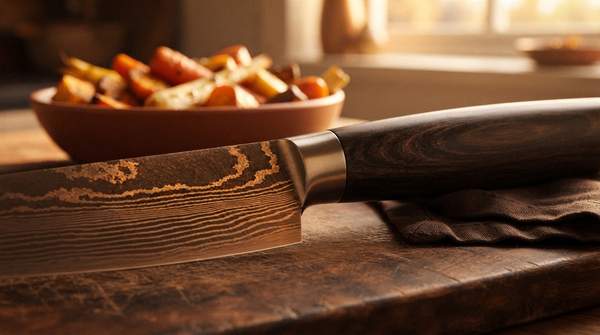
When you’re choosing a kitchen knife, the single most important factor is the blade material. It dictates everything from how sharp the knife can get to how often you’ll need to care for it. The truth is, there is no single best steel for every kitchen knife. The right choice for you depends entirely on your cooking habits, how much maintenance you’re willing to do, and the kind of performance you value most. A professional chef who prizes a razor-sharp edge has very different needs from a home cook who just wants a reliable tool that won’t rust.
The decision boils down to a fundamental trade-off between three key properties: sharpness and edge retention, resistance to corrosion, and the difficulty of sharpening and maintenance. Understanding this balance is the key to picking a knife you’ll love for years. The main players in the kitchen are carbon steel, stainless steel, and a hybrid of the two, high-carbon stainless steel. Each offers a distinct combination of these traits, catering to different types of cooks.
Kitchen Knife Blade Material Comparison
To make the choice clearer, it helps to see the primary materials side-by-side. This table breaks down the practical differences for a home cook, highlighting the core trade-offs between the most common options.
| Material Type | Sharpness & Edge Retention | Corrosion Resistance | Maintenance & Sharpening | Best For |
|---|---|---|---|---|
| Carbon Steel | Offers an exceptional cutting edge that can be sharpened to be much finer than stainless steel. It holds that edge well but is more rigid and can be prone to breakage. | Very low. This steel is highly susceptible to rust and discoloration if not cared for meticulously. | High maintenance. Requires thorough rinsing after use, oiling before storage, and frequent sharpening. However, it is easy to sharpen. | Enthusiasts and professional chefs who prioritize maximum sharpness and are committed to diligent, regular maintenance. |
| Stainless Steel | Generally softer and not as sharp as carbon steel. The edge tends to dull more quickly, requiring more frequent honing or sharpening to maintain performance. | Very high. Composed of iron and chromium (at least 13%), it is particularly resistant to rust and corrosion. | Low maintenance. Its rust resistance makes it very convenient for everyday use without the need for special care routines. | Home cooks who value convenience and corrosion resistance over achieving the absolute sharpest edge. |
| High-Carbon Stainless Steel | A hybrid that offers a remarkable cutting edge and holds it longer than standard stainless steel. It balances hardness with durability. | High. While not as impervious as standard stainless steel, the addition of chromium provides strong resistance to corrosion. | Moderate maintenance. It is easy to sharpen at home and does not require the intensive anti-rust care of pure carbon steel. | Cooks seeking a high-quality, durable knife that combines the sharpness of carbon steel with the low-maintenance benefits of stainless steel. |