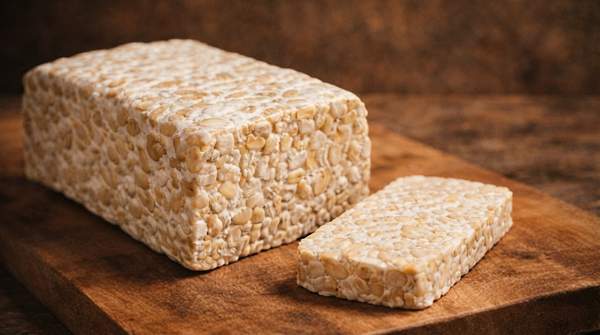
Tempeh is not simply cooked soybeans pressed together. It is the product of a controlled fungal fermentation in which Rhizopus molds perform two distinct jobs at once: their white mycelium physically knits whole soybeans into a firm, sliceable cake, and their secreted enzymes chemically dismantle the beans' complex proteins, carbohydrates, and antinutritional factors into forms the human body absorbs more readily. Understanding that dual transformation—structural and biochemical—explains why tempeh looks, tastes, and nourishes differently from unfermented soy products such as tofu.
Introduction to Tempeh: A Fungal Transformation
Tempeh originates from Indonesia, where a scoping review published in npj Science of Food by Yarlina and colleagues describes it as a traditional cultural staple and an inexpensive source of nutrition. The food is produced by solid-state fermentation of soybeans—more recently other legumes as well—dominated by Rhizopus species. The review credits fermentation with tempeh's firm texture, savory flavor, and improved nutritional value, noting that the process generates bioactive compounds and increases protein digestibility. What distinguishes tempeh from tofu is that the whole bean remains in the final product, transformed in place by a living fungus rather than extracted into a milk and curdled. That difference is not incidental; it is the direct consequence of how the fungus works.
Phase 1: Preparation and Inoculation – Setting the Stage for Fermentation
According to the review's account of the traditional Indonesian process, production begins with soaking, dehulling, and cooking the whole soybeans, followed by inoculation with a starter culture and solid-state fermentation at specified temperatures for defined periods. Each preparatory step serves the fungus. Soaking softens the beans and, as reported in tempeh industries, is sometimes accompanied by vinegar, which has been found to influence the final product's sensory character. Dehulling removes the tough outer coat that would block the mold's access to the nutritious interior, and partial cooking renders the bean's proteins and starches available for enzymatic attack. Inoculation introduces the fermenting organism itself—Rhizopus molds, filamentous fungi that are, as the encyclopedic record confirms, the organisms most widely used for tempeh production.