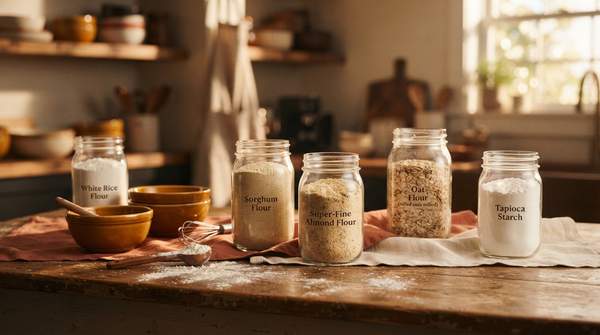
Here's the short answer: no single gluten-free flour can replace wheat flour on its own. The flours that work best are the ones matched to your goal — white rice flour for delicate cakes, sorghum for sturdy breads, almond for chewy, nutty cookies — and, more often than not, a blend of two or three of them working together. I've pulled together the five flours worth knowing, what each one actually contributes, and how to combine them so your cakes come out tender, your cookies chewy, and your breads structured instead of sad.
Understanding Gluten-Free Flours: Beyond Wheat
The single biggest mistake new gluten-free bakers make is treating these flours like a one-for-one swap. They're not. As Bob's Red Mill puts it, single-ingredient gluten-free flours "work a little differently. Rather than trying to replace wheat flour on their own, each contributes its own characteristics to a recipe. Some provide structure, others add softness, moisture or flavor, and many work best when paired with other gluten free flours or starches."
That's the whole game, really. Wheat flour contains gluten, which traps gas and gives baked goods their stretch and lift. Gluten-free flours don't have that, so each one brings something partial to the table — structure here, tenderness there, flavor somewhere else. Your job as a baker is to figure out which characteristic your recipe is missing, then pick the flour (or flours) that supply it.
Writing for Celiac.com, Scott Adams frames it as the key to enjoying baking again: "Understanding how to choose the right flour for the right recipe is the key to enjoying delicious baked goods again." And a blending guide from Naturevibe Botanicals makes the same point from the practical side — no single gluten-free flour perfectly replicates wheat, which is why experienced bakers lean on balanced blends rather than one flour doing everything badly.
Essential Gluten-Free Flours and Their Baking Roles
Let's meet the five. These are the workhorses you'll see again and again in gluten-free recipes, and each has a distinct personality.
White rice flour — the everyday workhorse. Light, neutral in flavor, and easy to digest, according to Celiac.com's guide. It's ideal for cookies, pancakes, and delicate cakes. One honest caveat from the same source: rice flour can create a gritty texture if used alone. So it shines as a team player, not a solo act.
Sorghum flour — the structure builder. A whole-grain flour that's a good source of protein and fiber, with a mild, slightly sweet flavor. Celiac.com notes it's excellent for bread dough, and it's well suited to breads, muffins, and cookies — especially in combination with other flours.
Almond flour — the flavor and richness one. Made from ground almonds, it's high in protein and low in carbohydrates, which is why it's popular for low-carb baking. It brings a slightly sweet, nutty flavor that genuinely enhances baked goods rather than just filling space.
Oat flour — the tender one. One of the most popular gluten-free baking ingredients, oat flour shows up in Naturevibe's recommendations for soft, tender baked goods — cakes and muffins — and again for chewy cookies and fluffy pancakes. It's the flour you reach for when you want softness and a gentle, familiar flavor.
Tapioca starch — the chew and binding agent. Not a flour in the nutritional sense, but essential to the lineup. Naturevibe's recipe-specific recommendations pair tapioca starch with rice and sorghum flours for bread structure, and with oat and almond for tender cakes. It's the ingredient that adds chew and helps things hold together.
The Art of Blending: Replicating Wheat's Properties
Here's where gluten-free baking clicks into place. Celiac.com's Adams is blunt about it: "One of the most important lessons in gluten-free baking is that no single flour can do everything. Blending is key. A mix of a heavier flour (like rice or sorghum), a protein-rich flour (like almond), and a starch (like tapioca) often yields the best results."
That gives you a three-part mental model for any blend:
- A structural flour — sorghum or rice — provides the body and backbone that gluten would otherwise supply.
- A protein-rich or tender flour — almond for protein and richness, oat for softness — rounds out texture and adds flavor.
- A starch — tapioca — contributes lightness, chew, and binding so the crumb doesn't fall apart.
The proportions shift with what you're making, and that's the real skill. Naturevibe's application-specific recommendations make the pattern visible: for soft, tender cakes and muffins, they suggest oat flour, almond flour, and tapioca starch. For chewy cookies with rich flavor, almond, oat, and white rice flour. For bread that needs structure, white rice flour, sorghum flour, and tapioca starch. Notice how bread leans on the heavier structural flours while cakes lean on the tender ones? That's the principle in action.
Adams also offers a practical tip for anyone who bakes regularly: settle on one mixture that works for you, then "measure, sift together, and store it in a self-seal bag in the freezer (so it doesn't get rancid) and it's ready to use when you get the urge to bake." A batch of your own blend, he notes, gives you more control than commercial all-purpose blends and lets you adjust for different recipes.
One thing this guide deliberately doesn't cover in depth: binders like xanthan gum or psyllium husk. They're worth knowing about — they're often added to gluten-free recipes to provide structure — but they're a separate topic with their own rules.
Gluten-Free Flour Selection Guide
Here's the at-a-glance tool. I've taken each flour's documented properties and mapped them to the baking outcomes they support, so you can go straight from "what am I making?" to "which flour do I grab?"
| Flour | Primary Contribution | Flavor Profile | Best Baking Applications |
|---|---|---|---|
| White rice flour | Lightness and fine texture; can turn gritty if used alone | Mild and neutral | Delicate cakes, cookies, pancakes, muffins — best combined with other flours |
| Sorghum flour | Structure; good source of protein and fiber | Mild, slightly sweet | Breads, muffins, cookies — works well in combination with other flours |
| Almond flour | Protein and richness; high protein, low carb | Slightly sweet, nutty | Chewy cookies, tender cakes and muffins, low-carb baking |
| Oat flour | Tenderness and softness | Gentle, familiar | Soft cakes and muffins, chewy cookies, fluffy pancakes and waffles |
| Tapioca starch | Chew, lightness, and binding | Neutral | Blend component for breads and cakes rather than a standalone flour |
How to read it: start with your desired texture, then work backward. Want a tender, delicate cake? Lead with white rice or oat flour and add tapioca starch for binding. Chewy cookie? Almond and oat are your friends. Sturdy bread? Sorghum and white rice flour, backed by tapioca starch, are the combination Naturevibe recommends specifically for improved structure.
And remember the blending principle above — the table is a menu, not a mandate to pick just one. The strongest results come from pairing a structural flour with a tender one and a starch, which is exactly how each of these application recommendations is built.
Baking Success: Your Next Steps
Choose gluten-free flours strategically based on their individual properties and the desired outcome for your specific baking project, rather than attempting a simple 1:1 substitution for wheat flour. That's the decision, and everything in this guide supports it: match the flour's contribution to the texture you're after, and blend when one flour can't do the whole job.
Your measurable indicator is simple: improved texture and flavor in your gluten-free baked goods, matching your intended results — light cakes, chewy cookies, structured breads. Next time a cake comes out dense or a bread crumbles, check it against the table. Dense cake? You probably needed more of a tender flour and less of a heavy one. Crumbly bread? More structure — sorghum, rice, and a starch — next round. Bake, compare, adjust, and repeat.
Sources
- What is the Best Gluten Free Flour for… — Bob's Red Mill Natural Foods
- The Best Gluten-Free Flours for Baking (And When to Use Each) — Celiac.com
- Best Gluten-Free Flour Blend for Baking — NaturevibeBotanicals